
Auction Finance: Why Speed of Decision Wins the Deal
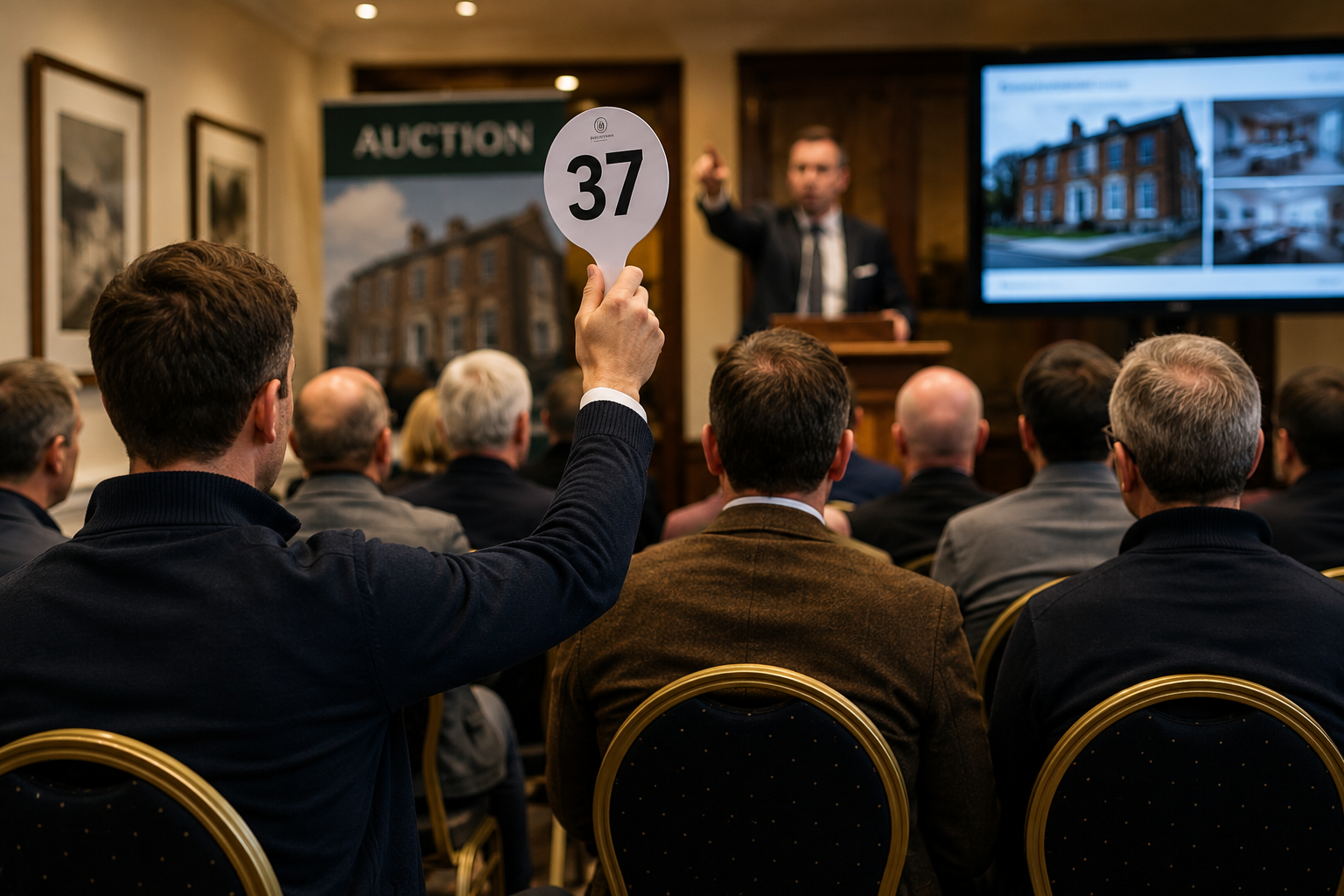
Property auctions have always run to an unforgiving clock. Win the hammer, and you’ve typically got 28 days to complete, sometimes fewer. For brokers and their clients, this is exactly why the speed of decision wins deal outcomes far more often than the headline interest rate ever does. A slightly higher monthly rate from a lender who can say yes today is worth infinitely more than a cheaper deal from a lender who needs three weeks just to get to underwriting. In the auction world, hesitation is the most expensive thing on the table.
At GMSL, we see this play out time and again. Brokers come to us assuming the conversation will start with “what’s your rate?” In reality, the conversation that matters most is “how fast can you decide, and how fast can you complete?” This article looks at what actually causes auction completions to stall, why decisiveness beats price on the clock, and how brokers can structure cases so their clients never lose a property because the finance moved too slowly.
The Auction Market Hasn’t Slowed Down
Auction volumes across the UK have remained consistently strong through 2025 and into 2026, with investor purchases now accounting for a meaningful and growing share of all bridging-backed transactions. Buyers are drawn to auctions because they offer certainty of sale, transparent pricing, and the chance to secure property below open-market value. But that certainty cuts both ways. The moment the gavel falls, the buyer is contractually committed, deposit paid, completion date fixed. There’s no renegotiating the timeline because a survey came back late or a lender wanted another set of accounts.
This is precisely where finance becomes the single biggest risk factor in an otherwise straightforward purchase. The property risk has already been assessed by the buyer before they raised their paddle. The real risk now sits entirely with whether funding lands on time. And that brings us back to the core point: why the speed of decision wins deal completions isn’t a slogan, it’s simply how the maths works once a 28-day clock starts ticking.
What Actually Causes Auction Completions to Stall
Brokers who’ve handled a few auction cases will already know the usual suspects. It’s rarely the headline rate that derails a purchase. It’s almost always one of the following:
1. Valuation delays
A standard mortgage valuation can take days to schedule and longer to report. On a 28-day clock, a valuation that doesn’t happen in the first week can sink the whole transaction before underwriting has even properly started. Lenders who maintain a panel of surveyors used to working to bridging timescales, or who accept desktop and AVM valuations on lower-risk cases, remove days from the process before it begins.
2. Slow decision-in-principle turnaround
Some lenders treat a decision-in-principle as a formality that can wait until “the next available slot.” For an auction purchase, that’s a fatal misunderstanding of the product. A same-day or 24-hour DIP isn’t a nice-to-have, it’s the difference between a client knowing they’re safe to bid with confidence and a client guessing. Lenders who can issue terms quickly give brokers something invaluable: certainty early enough to actually use it.
3. Solicitor readiness
This is the one that catches brokers out most often, because it’s not actually about the lender at all. Many auction purchases stall not because the funder was slow, but because the client’s solicitor wasn’t instructed, wasn’t experienced in bridging completions, or simply didn’t have capacity to turn around searches and replies to requisitions inside the timeframe. A lender with a strong, responsive panel of solicitors used to bridging deadlines can shave a week or more off a transaction compared with a client using their family conveyancer who normally handles standard residential purchases.
4. Underwriting bottlenecks on complex security
Auction lots are frequently the un-mortgageable end of the market: properties with short leases, structural issues, sitting tenants, or unusual construction. These are exactly the cases that benefit from underwriters who can make a judgement call quickly, rather than referring everything up a decision chain. This is where manual, experienced underwriting genuinely earns its keep over a purely automated or overly cautious process.
5. Documentation gaps discovered too late
Source of funds, ID verification, company structure for SPVs, proof of deposit, these all need to be gathered and checked. Lenders who flag requirements upfront, rather than discovering gaps midway through week three, prevent last-minute scrambles that can blow through completion dates.
Rate Is a Comparison Tool. Speed Is a Completion Tool.
None of this is to say rate doesn’t matter, it absolutely does, particularly on larger loans or longer-term bridges where the cost compounds. But rate only matters if the deal completes. A borrower who loses their deposit and the property because finance arrived on day 32 instead of day 28 hasn’t saved anything by choosing the cheaper lender. They’ve lost the asset, the deposit, and often the auction fees too.
This is the real reason why the speed of decision wins deal after deal in the auction space: speed isn’t a luxury feature bolted onto a finance product, it’s the product. A bridging lender’s core value proposition at auction is the ability to move at the pace the market demands. Anything that slows that down erodes the entire reason a client chose bridging finance in the first place.
For brokers advising clients pre-auction, this changes the conversation. Instead of leading with rate comparisons, the stronger move is to qualify lenders on:
- How quickly they can issue a decision-in-principle
- Whether they have a panel of solicitors experienced with bridging timescales
- Their appetite and turnaround for valuations, including desktop options where appropriate
- Their underwriting approach for non-standard security
- Whether they pre-underwrite cases ahead of auction day, so funds are essentially ready to release the moment the hammer falls
How GMSL Removes Friction From Auction Cases
This is the space where a specialist master brokerage adds the most value. As whole-of-market brokers with over 40 years of combined experience in specialist lending, we don’t just shop for the cheapest rate, we shop for the lender whose process matches the deadline. We pre-underwrite cases wherever possible, so by the time a client’s paddle goes up, the funding decision has effectively already been made in principle.
We also know which lenders genuinely turn around valuations and legal work inside auction timescales, and which only claim to on their website. That knowledge, built over years of placing cases with the same panel of lenders and solicitors, is what stands between a client completing on time and a client losing their deposit.
The Bottom Line for Brokers and Their Clients
Auctions reward decisiveness. The buyer who hesitates loses the lot to someone else in the room. The same principle applies to the finance behind the purchase. A lender who’s slightly more expensive but consistently completes on time will win more repeat business from brokers than a cheaper lender with a reputation for missing deadlines. That’s not a coincidence, it’s the entire logic of the market.
If you’re advising a client ahead of an auction, or you’ve got a tight completion date already on the clock, talk to us before the rate conversation even starts. Get the speed conversation right first, the rest follows.