
The Hidden Costs of Getting Development Finance Wrong: And How to Avoid Them
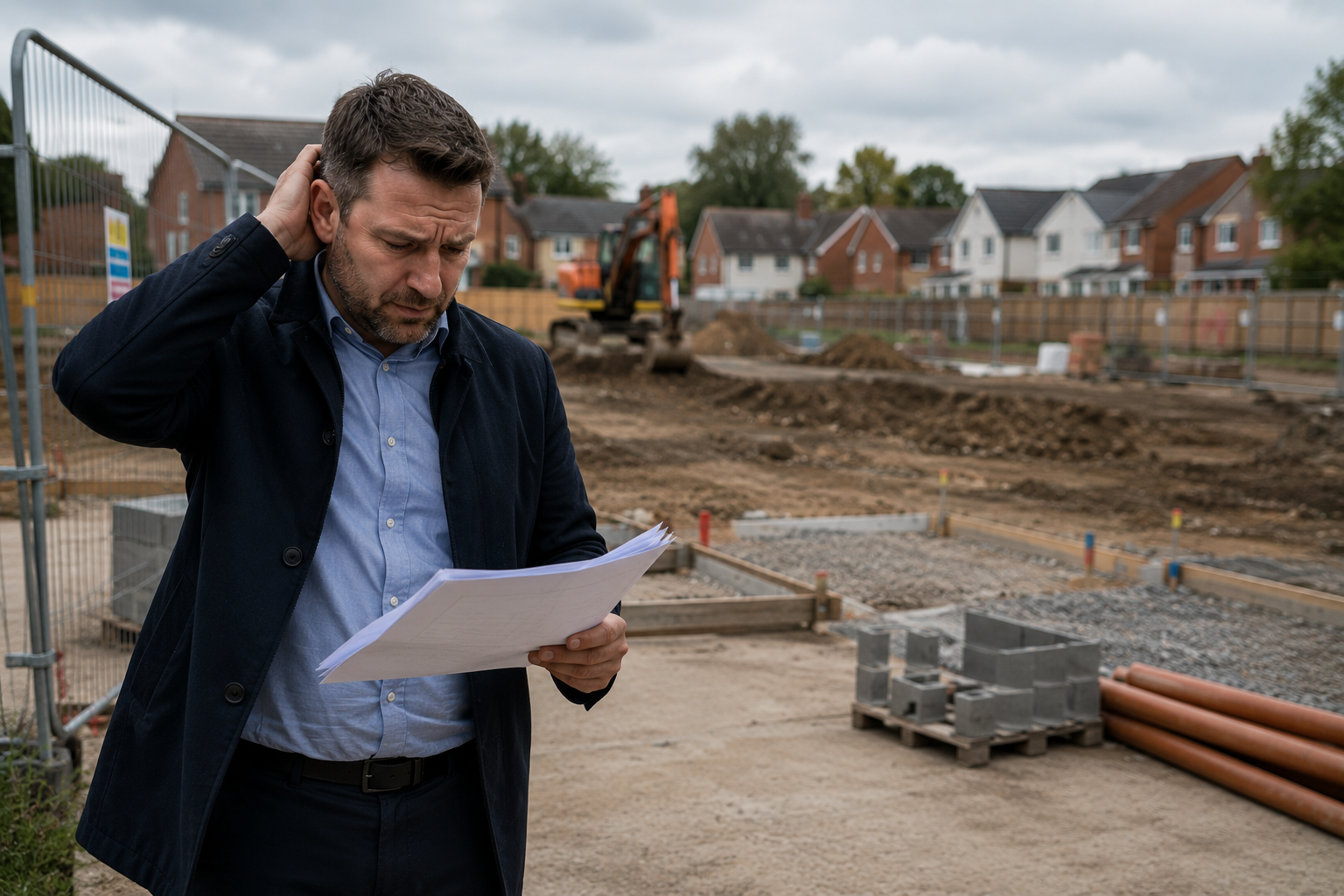
Property development can be one of the most rewarding strategies in the UK investment market. It can also be one of the most expensive places to make avoidable mistakes. For many developers, the problems that derail a project rarely start on site. They start much earlier, in the planning, the appraisal, and the way development finance is structured before a spade goes in the ground. Getting the funding right from the outset is not just a box-ticking exercise. It is the foundation on which the entire project stands, and the difference between a scheme that completes on budget and one that runs out of money halfway through.
This guide covers the most common and costly mistakes developers make when approaching development finance, and what to do instead.
Mistake 1: Treating the Build Cost as a Fixed Number
The single most common error in development finance applications is underestimating build costs. It happens with experienced developers as well as first-timers, and it almost always comes from the same place: presenting the most optimistic version of the numbers in order to make the appraisal work.
Lenders see through this quickly. When a cost per square foot looks unusually low for the property type, location, and specification, underwriters will either adjust the figure themselves or ask questions that slow the whole process down. More importantly, an underestimated build cost creates a real problem on site when actual costs arrive and the contingency is not there to absorb them.
In 2026, BCIS median build costs for new-build residential in the South East of England sit at approximately £165 to £195 per square foot for standard specification. Costs vary significantly by region, specification level, and build type, but the point is this: build costs should be modelled on current, evidenced figures, not on what makes the appraisal look comfortable.
The fix is straightforward. Get a proper quantity surveyor or contractor cost plan before approaching a lender. A detailed, credible cost plan built on real market rates is one of the strongest things a developer can put in front of an underwriter.
Mistake 2: Leaving Out the Contingency
Closely related to underfunded build costs is the failure to include an adequate contingency. This is not an optional line in a development appraisal. It is a non-negotiable requirement for any serious lender, and its absence is treated as a red flag regardless of how strong the rest of the application looks.
Most lenders expect to see a contingency allowance of between 5% and 10% of total build costs. For ground-up new build schemes with detailed designs and fixed-price contracts, 5% is generally acceptable. For refurbishments and conversion projects, where existing building conditions can throw up surprises, 7.5% to 10% is the expectation. For schemes involving listed buildings, basement excavations, or anything with complex engineering, 10% is the minimum some lenders will accept.
Lenders have declined applications where the developer included zero contingency, even when every other aspect of the deal was strong. It signals either a failure to understand how construction works, or an unwillingness to acknowledge uncertainty, neither of which inspires confidence at underwriting stage.
Building in a contingency is not an admission that the numbers are uncertain. It is the mark of an experienced developer who understands that unexpected costs are not the exception in property development. They are the rule.
Mistake 3: Only Funding the Purchase
This is one of the most common ways development goes wrong, and it tends to catch first-time developers hardest. A developer secures finance for the land or building purchase, assumes the build costs will be funded separately or from cash reserves, and discovers partway through the project that the numbers no longer stack up.
Development finance is available as a staged facility that covers both the purchase and the build costs, with funds drawn down in tranches as construction progresses. In many cases, a lender will advance up to 85% to 90% of total project costs, subject to the loan-to-gross-development-value cap taking precedence. That means the developer’s actual equity requirement can be limited to as little as 10% to 15% of total costs, rather than funding the build entirely from personal resources.
The developers who get into trouble mid-project are typically the ones who went looking for purchase finance only, or who did not understand how a staged facility works, and ended up committed to a site without a clear plan for where the construction funding was coming from. The right conversation to have before buying is not just “can I fund the acquisition?” It is “what does the full funding stack look like from day one through to completion and exit?”
Mistake 4: Ignoring Pre-Commencement Planning Conditions
Full planning permission does not mean unconditional permission to build. Most planning consents come with pre-commencement conditions attached, requirements such as drainage strategies, construction management plans, archaeological surveys, or materials approval that must be formally discharged by the local authority before any work can begin on site.
Developers who fail to factor in the time and cost of discharging these conditions can find themselves committed to a development finance facility, paying rolled-up interest, and unable to start on site for weeks or months while the paperwork catches up. On a facility where interest is accruing against the full loan from day one, that delay has a direct and measurable cost.
The straightforward answer is to get the planning position fully understood before committing to a site and a finance structure. A solicitor who understands development, and a broker who asks the right questions about the planning consent before structuring the deal, will flag these issues early rather than discovering them after contracts are exchanged.
Mistake 5: Not Thinking About the Exit Before You Buy
Every development finance facility has to be repaid, and the lender wants to know exactly how before they will agree to lend. The exit strategy is not a formality to fill in at the end of an application form. It is one of the first things a lender assesses, and a weak or vague exit strategy can undermine an otherwise strong case.
The two most common exits for a development project are sale and refinance. If the plan is to sell, the lender will want to see that the end values are realistic, that comparable sales evidence supports the GDV assumptions, and ideally that demand for the finished product has been validated in some way. If the plan is to refinance onto a buy-to-let or commercial mortgage once the development is complete, the developer needs to demonstrate that the completed property will meet the criteria of the refinance lender, and that the numbers work on the exit facility at current rates, not at the rate environment that existed when the project started.
Lenders are also increasingly alert to sale timescales. Properties in the current market are taking longer to transact than in previous years, and a development finance facility structured around a sale exit that assumes the units will be sold and the loan repaid within a specific window needs to account for the reality of current sales timescales, not an optimistic projection.
Getting the exit strategy right at the start of the project, not after the build is complete, is what keeps a developer in control of the timeline and the costs.
Mistake 6: Choosing the Cheapest Lender Rather Than the Right One
Rate matters in development finance, but it is far from the only thing that matters. A lender who offers a sharp headline rate but has a slow drawdown process, an inflexible monitoring surveyor, or a track record of creating problems at practical completion can cost a developer significantly more in delays and stress than the interest saving was ever worth.
The development finance market includes over 100 active lenders in the UK. The differences between them go well beyond pricing. Some lenders have deep experience with specific build types or locations. Some move faster than others on credit decisions. Some are pragmatic when projects hit the inevitable bumps that all projects hit. Others are not.
Working with a whole-of-market specialist broker means the lender selection is made on the basis of which funder is genuinely right for the project, not just who is advertising the lowest rate at that moment.
Getting Development Finance Right From the Start
The mistakes above share a common thread. Most of them are not problems that emerge during the build. They are problems that were built into the structure of the deal before the project started, and which become progressively more expensive to fix the later they are discovered.
The best time to talk to a specialist development finance broker is the moment a site or project opportunity is identified, not once the purchase is already committed and the options have narrowed. A good broker will stress test the appraisal, identify the right lender for the specific project, structure the facility to cover the full cost stack, and make sure the exit strategy is solid before any money moves.
At GMSL, we work with developers and their brokers across all stages of the project lifecycle, from initial appraisal through to exit. If you have a development project you are looking to fund, or a scheme that has hit a funding problem partway through, get in touch and we will tell you straight what the options look like.